Divination Practice
Open and Close a Divination Session With Clear Spiritual Intention
Give a divination session a clear opening and closing, with a focused question, spiritual intention, a limited reading and a conscious return to ordinary activity.
A divination session can have a recognizable beginning and ending, whether you work with tarot, oracle cards or another symbolic tool. Those bookends help distinguish intentional spiritual exploration from repeatedly checking for an answer throughout the day. You do not need a formal ceremony. A few consistent words and actions can make the session feel like a chosen encounter with meaning.
Prepare the question and the space
Prepare a small surface and one question before handling the tool. Ask something the practice can explore symbolically, such as “What quality needs attention in this transition?” Put aside unrelated questions rather than trying to read every part of your life at once. A clear focus gives the symbols a context and makes it easier to recognize when the session has actually answered the inquiry you brought.
For the opening, name your intention in your own spiritual language. You might welcome wisdom, invoke a trusted sacred presence within your tradition, or simply state that you are entering a period of reflective listening. If you use protective imagery, keep it calm and voluntary. You do not need to frighten yourself with the belief that an ordinary card reading automatically exposes you to danger.
Decide the scope before drawing
Choose the scope before drawing. One card with a supporting card, or a small spread with named positions, is enough for a short session. Describe the symbols before deciding what they mean. If the interpretation is unclear, write the question beside the card rather than immediately expanding the spread. An unfinished understanding can remain part of the record without requiring another dozen cards.
When the planned reading is complete, summarize it in a few lines: the central image, your interpretation and what remains uncertain. Keep factual observations separate from spiritual impressions. You might feel drawn to explore a new direction without knowing when it will become practical. Writing that distinction preserves the richness of the reading while preventing a tentative impression from hardening into an absolute prediction.
Mark a calm, conscious ending
Close with a simple acknowledgement, then gather the cards or put the tool away. You can say, “This reading is complete for now; I carry forward what is useful.” Notice the room, move your body comfortably and shift into an ordinary activity. The action is a spiritual transition marker, not an emergency procedure. A quiet closing is enough even if the reading felt emotionally important.
If the urge to reopen arrives immediately, read your notes before touching the tool again. Ask whether a new question exists or whether you are seeking a different version of the same answer. You can schedule another session after some time or new information. Letting a reading rest is part of divination practice: symbols need space to be considered, and your life continues outside the spread.
Explore spiritual and energy guides.
Photograph and attribution
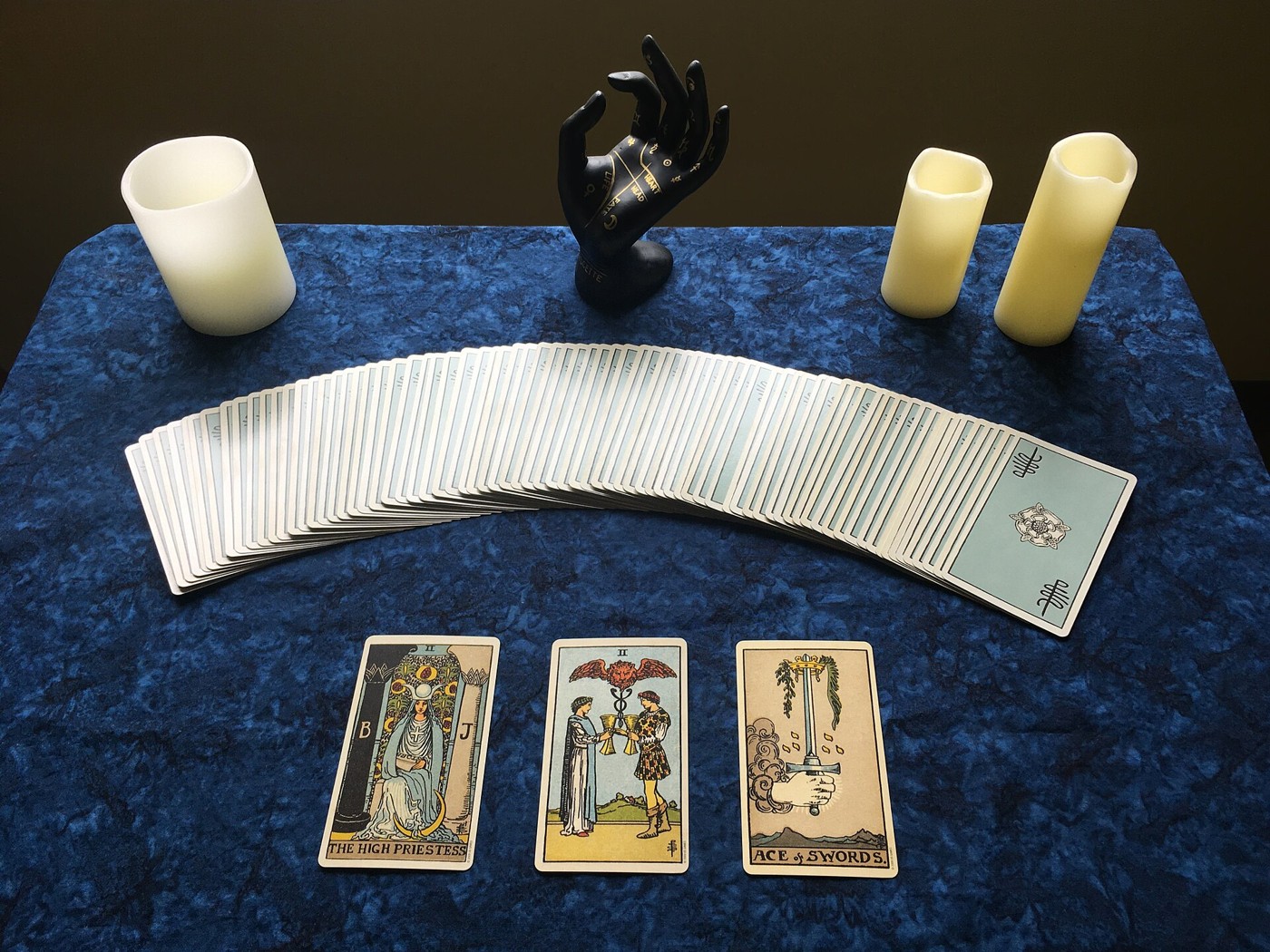
Representative real photograph of a small divination setup; not a client session or a requirement to use lit candles. Photo: Nosferattus; CC0. Display copy resized. Original photograph and rights record. License terms.